Beer. Belly. Breast cancer?
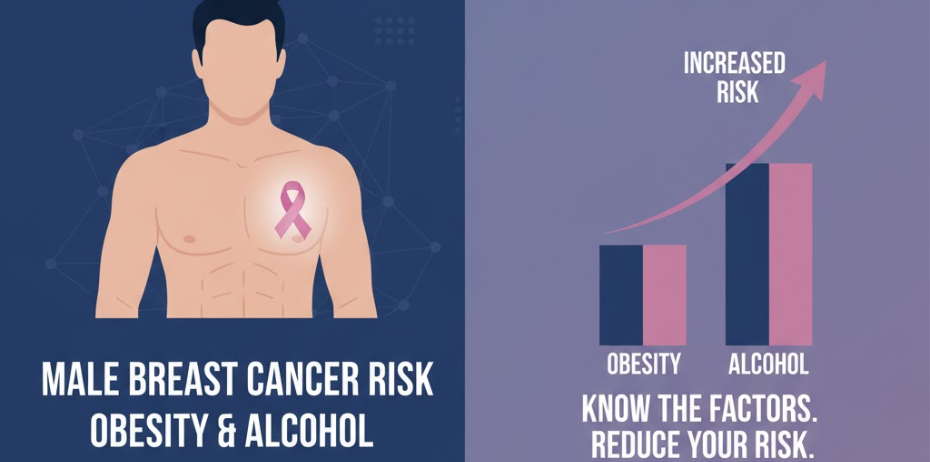
It may sound surprising, but science shows a strong connection. When you combine excess belly fat with alcohol consumption, you may unknowingly increase your male breast cancer risk from obesity and alcohol. This article by Arogyam Care explains how obesity, alcohol, and hormones interact, and what simple lifestyle changes can help reduce your risk.
The Hormone Hijack: How Fat Triggers Cancer Risk
Excess body fat does more than add weight—it changes your hormones. Fat tissue produces aromatase, an enzyme that converts testosterone into estrogen, disturbing the natural hormone balance in men.
More fat means more aromatase, which leads to higher estrogen and lower testosterone levels. This imbalance promotes abnormal breast cell growth and increases the male breast cancer risk from obesity and alcohol.
Research Insights
- A higher Body Mass Index (BMI) directly increases the risk of male breast cancer.
- Waist-to-height ratio can predict risk up to five years before diagnosis.
- Every unit increase in waist-to-hip ratio (WHR) raises risk by around 13%.
- Waist size predicts obesity-related cancer risk more strongly in men than women.
Arogyam Care Tip: Keep your WHR below 0.9 to maintain hormonal balance and reduce overall cancer risk.
Adding Fuel to the Fire: The Role of Alcohol
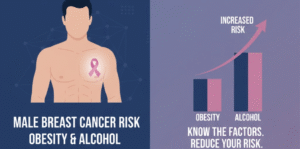
If excess fat is the factory, alcohol is the fuel that powers it. Alcohol compounds the male breast cancer risk from obesity and alcohol by disrupting liver function and elevating estrogen levels.
Alcohol also forms acetaldehyde, a carcinogenic compound that damages DNA and interferes with the body’s ability to repair it.
Alcohol and Cancer Risk
- One drink per day increases risk by about 1.1×.
- Two drinks per day raise risk by 1.2×.
- Three or more drinks per day raise risk by 1.4× compared to non-drinkers.
Even light drinking promotes estrogen-driven cell growth while reducing the liver’s ability to remove hormones safely.
Arogyam Care Reminder: There is no completely safe level of alcohol when it comes to cancer prevention.
The Unspoken Cancer: Why Awareness Matters
Male breast cancer accounts for less than 1% of all breast cancers, yet delayed diagnosis is common due to low awareness. The male breast cancer risk from obesity and alcohol can be significantly reduced by understanding modifiable lifestyle factors.
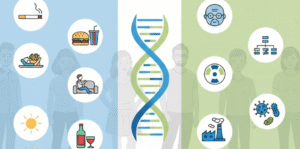
Key Risk Factors
- Obesity and central belly fat
- Heavy or regular alcohol consumption
- Hormonal imbalance
- Family history of breast or hormone-related cancers
Arogyam Care Insight: Awareness, regular checkups, and timely lifestyle changes can make all the difference.
Your 3-Step Battle Plan to Reduce Male Breast Cancer Risk
Step 1: Shrink the Factory — Improve Diet and Exercise
Follow a balanced diet rich in vegetables, fruits, whole grains, and lean proteins. Avoid processed foods and added sugars.
- Exercise for at least 30 minutes daily.
- Maintain a healthy BMI and WHR below 0.9.
- Focus on reducing visceral fat to improve hormonal health.
Step 2: Rethink Your Drink
Alcohol amplifies the male breast cancer risk from obesity and alcohol through hormonal and cellular effects.
- Introduce alcohol-free days each week.
- Gradually reduce total consumption.
- Choose healthy alternatives like herbal teas or fruit-infused water.
Every skipped drink lowers your long-term cancer risk.
Step 3: Be Proactive, Not Reactive
Early detection saves lives.
- Watch for lumps, swelling, or nipple changes in the chest area.
- Discuss your BMI, waist measurements, and alcohol use during medical visits.
- Get checked if you have a family history of breast or prostate cancer.
Taking action early improves outcomes dramatically.
Conclusion: Small Choices, Strong Protection
The male breast cancer risk from obesity and alcohol is often overlooked, but it’s a real and preventable threat. Excess body fat disrupts hormones, while alcohol amplifies those effects, increasing cancer risk over time. By managing weight, reducing alcohol intake, and staying physically active, men can maintain healthier hormone levels and lower their risk. Awareness and prevention are the foundation of lasting wellness. At Arogyam Care, we believe that every small lifestyle choice contributes to a healthier, cancer-free future.